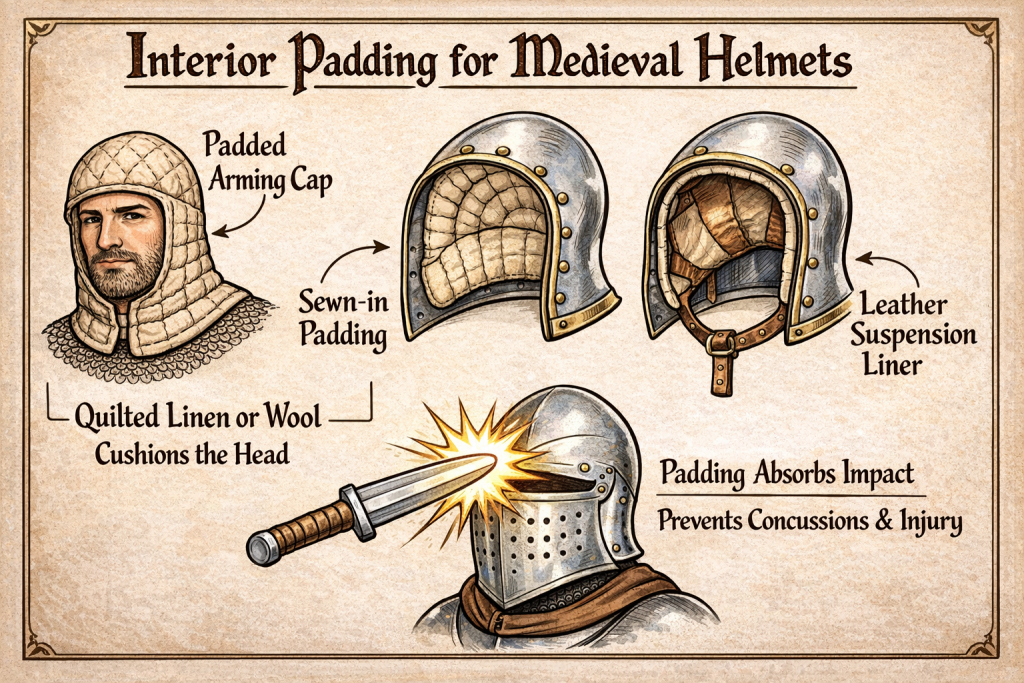
Medieval helmets typically included interior padding or a padded cap worn underneath to cushion the wearer from the hard metal shell. Knights commonly wore a quilted arming cap made of linen, wool, or layered cloth, which absorbed sweat, reduced friction, and helped the helmet fit securely. In some later helmet designs, especially during the 14th and 15th centuries, padding or a leather suspension liner was attached inside the helmet itself to create space between the metal and the skull. This cushioning was essential because it helped absorb shock from blows, reduce the risk of concussion, and distribute impact forces across the head. Without such padding, even minor strikes against the metal helm could transfer significant force directly to the wearer’s head, making interior cushioning a critical component of medieval protective armor.