Essential Staff in a Samurai Household
1. Personal Retainers
The most important household members were other samurai retainers sworn to serve the lord.
Example role:
-
Kashin
Responsibilities:
-
military service in battle
-
guarding the residence
-
acting as messengers
-
representing the lord in official matters
In large domains, these retainers formed the military and administrative backbone of the household.
2. Sword Bearer / Weapon Attendant
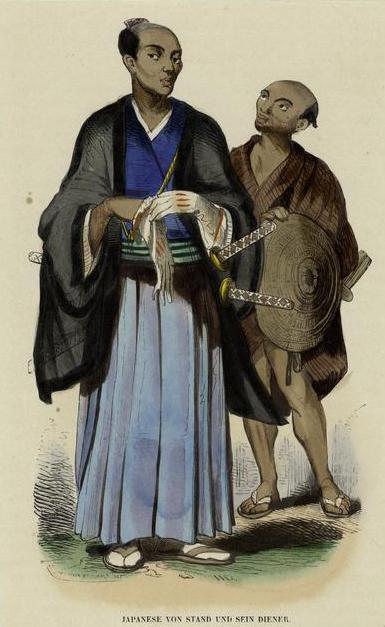
Many samurai had an attendant responsible for weapons.
Example:
-
Koshō
Duties included:
-
carrying swords or armor
-
preparing equipment
-
assisting during travel
-
learning samurai etiquette and martial culture
This role was often filled by young samurai in training.
3. Household Steward / Administrator
Larger samurai households required financial and logistical management.
Example role:
-
Karō
Responsibilities:
-
managing finances and rice stipends
-
supervising retainers
-
coordinating estate operations
-
advising the lord on policy
In major domains, this person functioned almost like a prime minister.
4. Domestic Servants
Daily life required practical labor.
Typical staff included:
-
cooks
-
cleaners
-
laundry workers
-
gate attendants
-
stable workers
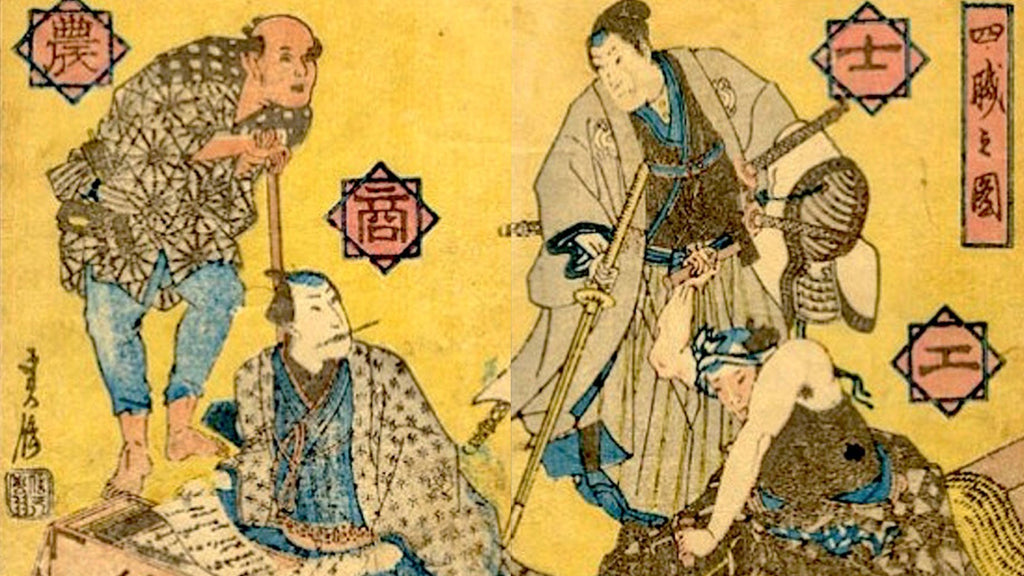
These servants were often commoners, not samurai.
5. Armor and Equipment Caretakers
Armor and weapons required upkeep.
While specialists like sword polishers lived outside the household, some estates had attendants who:
-
maintained armor
-
stored weapons
-
prepared gear before travel or battle
These workers ensured equipment was ready when needed.
6. Tutors and Educators
Samurai families valued education.
Households often hired instructors in:
-
Confucianism
-
literature
-
calligraphy
-
martial arts
These teachers trained both sons and young retainers.
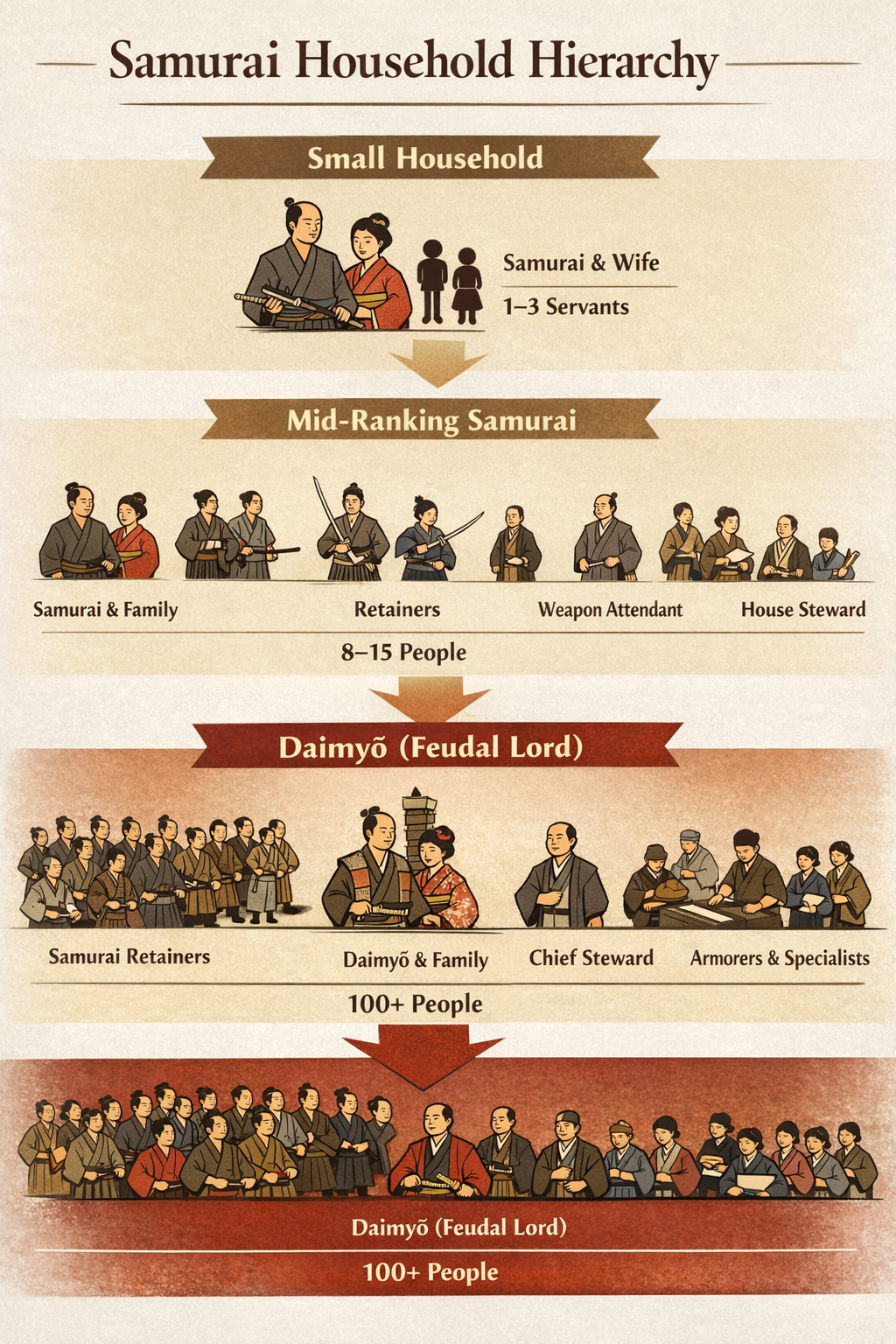
Household Size by Rank
Low-ranking samurai
-
family members
-
1–3 servants
Mid-ranking samurai
-
several retainers
-
servants
-
pages
Daimyō (feudal lord)
-
dozens to hundreds of retainers
-
full administrative staff
-
guards and attendants
Example:
-
The court of Tokugawa Ieyasu included thousands of retainers across his domains.