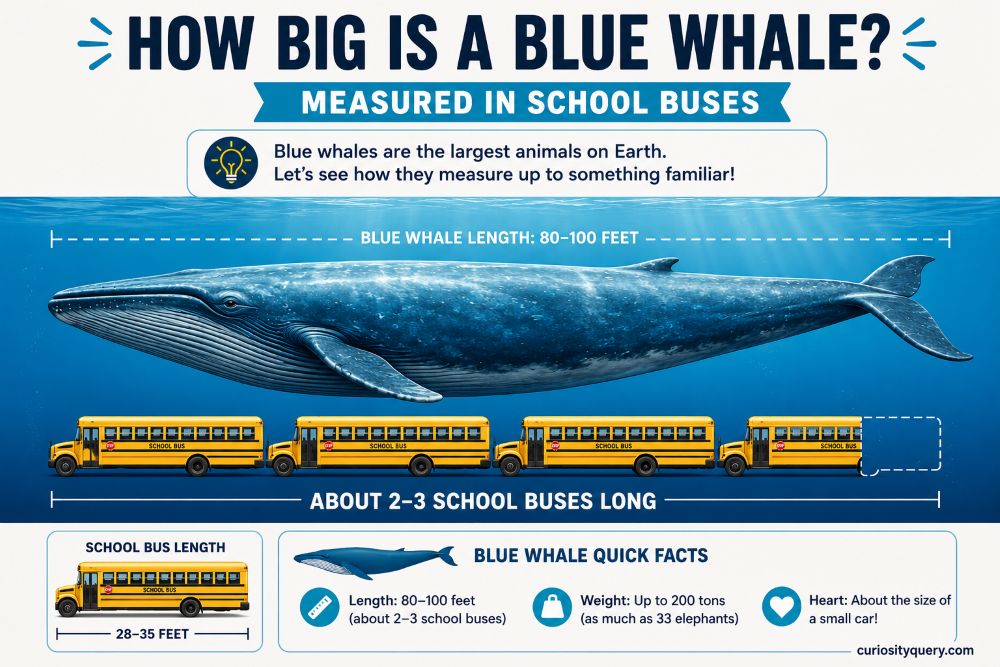
The largest animal known to have ever lived on Earth is the Blue Whale.
Blue Whale Facts
-
- Length: Up to about 100 feet (30 meters) long.
-
- Weight: Up to 200 tons (180 metric tons) or more.
-
- Heart: About the size of a small car, weighing around 400 pounds (180 kg).
-
- Tongue: Can weigh as much as an elephant.
-
- Diet: Mostly tiny shrimp-like creatures called Krill.
-
- Habitat: Found in oceans worldwide.
How Big Is That?
A fully grown blue whale is approximately:
-
- As long as 3 school buses lined up end-to-end.
-
- Heavier than 30 African elephants.
- Larger than any known dinosaur by mass.
The Blue Whale is currently the heaviest animal for which we have strong scientific evidence.
What about the giant dinosaurs?
Some of the largest known dinosaurs include:
- Argentinosaurus — estimated around 65–100 tons.
- Patagotitan — estimated around 60–80 tons.
- Dreadnoughtus — estimated around 50–70 tons.
Even the largest estimates for these giant sauropods generally fall short of the largest blue whales, which can exceed 180–200 tons.
Could there have been larger animals?
Possibly.
The fossil record is incomplete. Most animals that ever lived left no fossils, and many fossils remain undiscovered. It is conceivable that an even larger marine animal existed at some point and has not yet been found.
However, based on current evidence:
- Largest animal alive today: Blue whale.
- Largest animal known from the fossil record: Also the blue whale.
- Largest land animals ever known: Giant sauropod dinosaurs such as Argentinosaurus and Patagotitan.
Why can whales get so much bigger than land animals?
Water supports their weight.
On land, gravity places enormous stress on bones, muscles, and joints. In the ocean, buoyancy offsets much of that weight, allowing whales to evolve to sizes that would be impossible for a terrestrial animal.