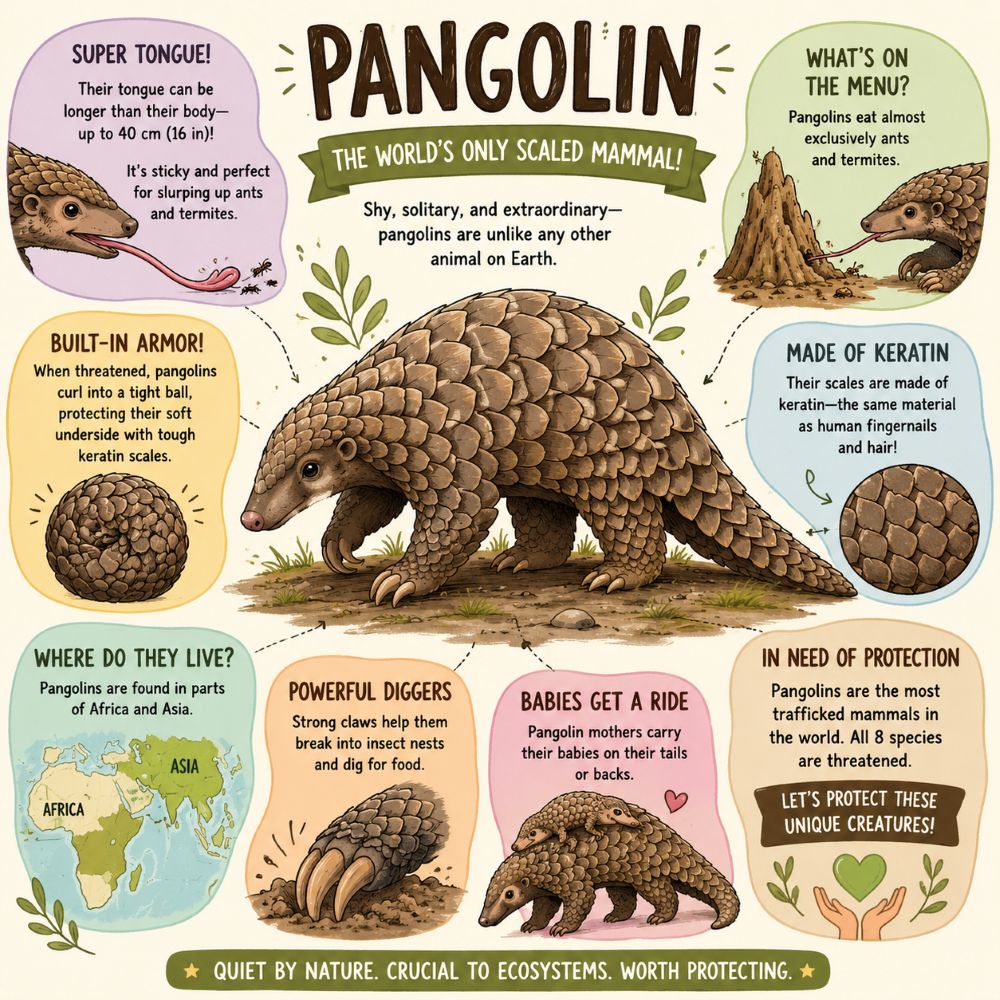
A pangolin is a unique mammal covered in hard, overlapping scales made of keratin—the same material found in human fingernails and hair. It is the only mammal in the world with true scales.
Pangolin
Quick Facts
- Diet: Primarily ants and termites.
- Tongue: Their sticky tongue can be longer than their body and is used to reach insects deep inside nests.
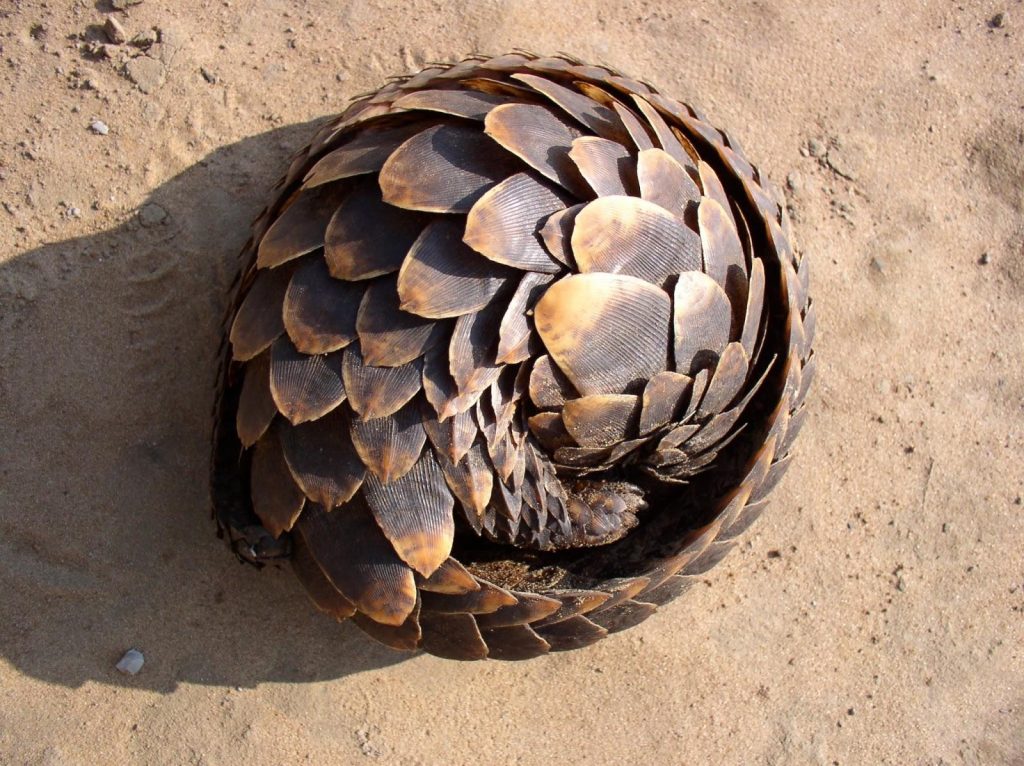
- Defense: When threatened, they curl into a tight ball, protecting their soft underside with their scales.
- Habitat: Found across parts of Africa and Asia.
- Size: Depending on the species, they range from about 1 to 5 feet (30 cm to 1.5 m) long.
Why Do They Look Like Reptiles?
Although their scales make them look reptilian, pangolins are warm-blooded mammals. They give birth to live young and nurse them with milk.
Are Pangolins Related to Anteaters?
Not closely. Pangolins and anteaters evolved similar features independently because they eat similar foods—a process called convergent evolution. Both have long tongues and strong claws for breaking into insect nests.
Why Are Pangolins Famous?
Unfortunately, pangolins are among the most heavily trafficked mammals in the world. Their scales are used in some traditional medicines, and their meat is considered a delicacy in some regions. All eight species face conservation threats, and several are endangered.
A Curiosity Query
A pangolin’s tongue is so long that when retracted, it extends deep into its chest cavity and is anchored near its pelvis rather than its throat.
Pangolins are often described as looking like a cross between an anteater, an armadillo, and a pine cone but they’re a completely distinct group of mammals.
Wildlife of the World