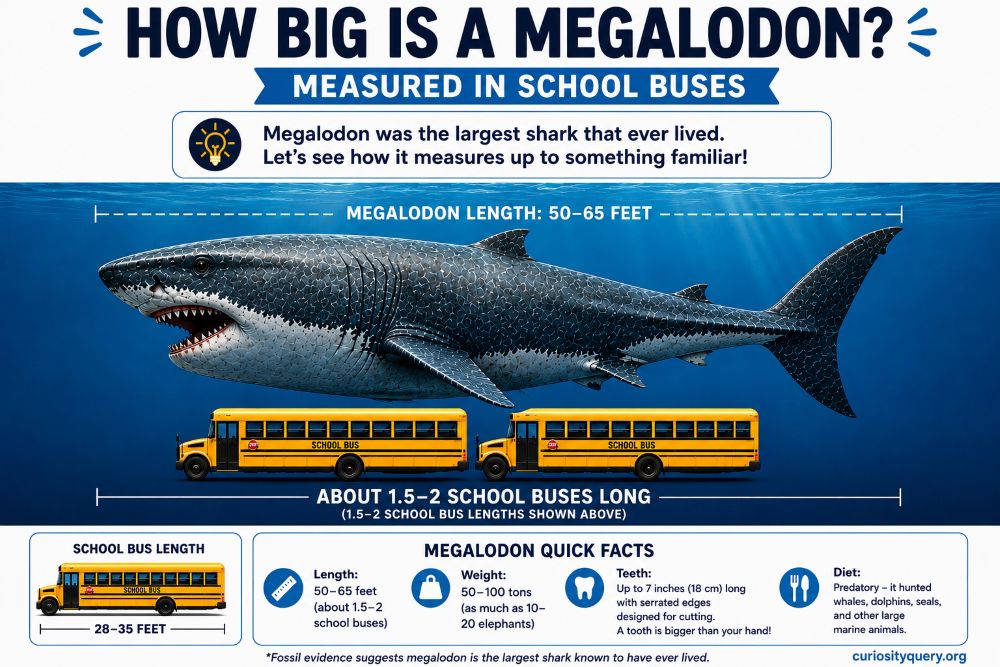
The famous Megalodon was enormous—but not close to the size of a blue whale.
Megalodon vs. Blue Whale
| Animal | Length | Weight |
|---|---|---|
| Megalodon | ~50–65 ft (15–20 m) | ~50–100 tons (estimates vary) |
| Blue Whale | ~80–100+ ft (24–30+ m) | ~100–200+ tons |
So while Megalodon may have rivaled some large dinosaurs in mass, it was generally:
- Shorter than a blue whale
- Much lighter than the largest blue whales
- Not the largest animal known to have lived
Why does Megalodon seem bigger in popular culture?
Movies and illustrations often exaggerate its size because:
- It was the largest predatory shark known.
- Humans naturally compare it to modern sharks like the Great White Shark, making it appear impossibly huge.
- A 60-foot shark is far more intimidating than a 100-foot whale that mostly eats tiny krill.
Which was more dangerous?
- Megalodon was likely one of the most powerful predators ever, feeding on whales, dolphins, seals, and other marine mammals.
- Blue whales are filter feeders and pose essentially no threat to humans.
A useful comparison is this:
A Megalodon was like a giant predatory sports car of the ocean. A blue whale is like an ocean-going cargo ship—much larger overall, but not built for hunting.
CQ Fun Fact
An interesting angle is that the largest predator that ever lived (Megalodon) was still significantly smaller than the largest animal that ever lived (the blue whale). That surprises a lot of people because our brains tend to associate “biggest” with “top predator.”