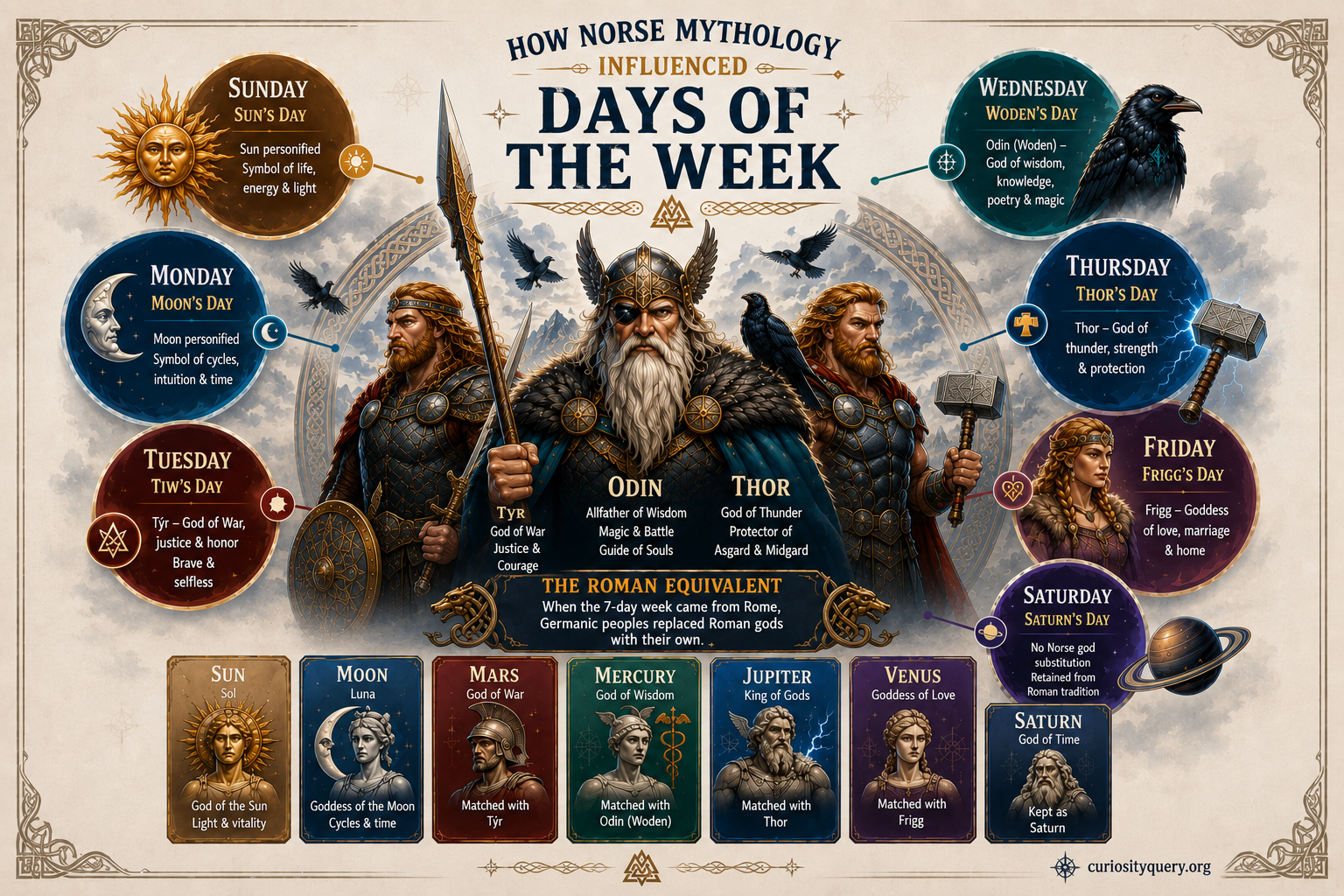
The English names for several days of the week come directly from figures in Germanic/Norse mythology. When Germanic peoples adopted the Roman seven-day week, they often substituted their own gods for Roman gods with similar roles.
| Day | English Name Origin | Norse/Germanic Figure | Roman Equivalent |
|---|---|---|---|
| Sunday | Sun’s Day | Sun personified | Sun |
| Monday | Moon’s Day | Moon personified | Moon |
| Tuesday | Tiw’s Day | Týr | Mars |
| Wednesday | Woden’s Day | Odin (Woden) | Mercury |
| Thursday | Thor’s Day | Thor | Jupiter |
| Friday | Frigg’s Day | Frigg | Venus |
| Saturday | Saturn’s Day | No Norse substitution | Saturn |
Why these substitutions?
The Romans named the days after celestial bodies associated with their gods. When Germanic peoples adopted the system, they matched Roman gods with their own:
- Mars → Týr: Both associated with war and courage.
- Mercury → Odin (Woden): Both connected with wisdom, knowledge, magic, and guiding souls.
- Jupiter → Thor: Both were powerful sky and thunder gods.
- Venus → Frigg: Both associated with love, marriage, and domestic life.
The most obvious examples
- Tuesday = Tiw’s Day → Týr
- Wednesday = Woden’s Day → Odin
- Thursday = Thor’s Day → Thor
- Friday = Frigg’s Day → Frigg
Curiosity Query Fun Fact:
Many other European languages kept the Roman names instead:
- French: Mardi (Mars), Mercredi (Mercury), Jeudi (Jupiter), Vendredi (Venus)
- Spanish: Martes, Miércoles, Jueves, Viernes
So every time you say Thursday, you’re unknowingly invoking the name of the hammer-wielding Norse god Thor, whose influence has survived for over a thousand years in everyday English.